Memphis Grizzlies vs Utah Jazz Match Player Stats (April 10th, 2026)

Jazz Turned Delta Center Into a Statement Night — Full Game Breakdown
The Memphis Grizzlies vs Utah Jazz match on April 10, 2026, ended in a commanding 147–101 Jazz victory at a sold-out Delta Center in Salt Lake City. Utah shot a scorching 56.4% from the field and outplayed Memphis in every single category — from the opening quarter to the final buzzer.
Memphis arrived severely short-handed, with multiple key rotation players ruled out through injury. Those who regularly follow in-depth NBA player performance tracking and game-by-game stat logs would recognize this as one of Utah’s most dominant home performances of the 2025–26 season.
Game Information — Memphis Grizzlies vs Utah Jazz
| Detail | Info |
|---|---|
| Match | Memphis Grizzlies vs Utah Jazz |
| Date | April 10, 2026 |
| Day | Friday |
| Starting Time | 6:30 AM |
| Arena & City | Delta Center, Salt Lake City, UT |
| Officials | Tyler Ford, Matt Kallio, Natalie Sago |
| Audience | 18,186 |
| Final Score | Utah Jazz 147 — Memphis Grizzlies 101 |
How Each Team Performed on This Friday Night
Utah Jazz — Efficient, Deep, and Relentless
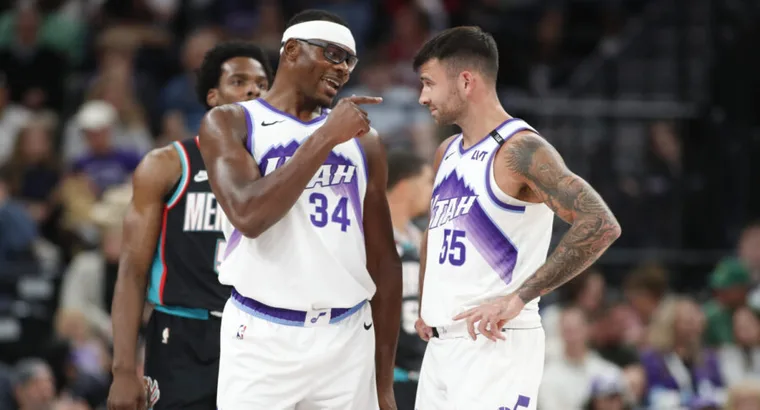
Utah came out with locked-in energy and never let off the gas. Blake Hinson was the standout, dropping 30 points on 63.2% shooting while knocking down 4 threes — the kind of output that sets the tone early. Bez Mbeng matched that energy with 27 points and 11 assists, and the Jazz’s April 2026 home form and recent matchup results make it clear this level of performance hasn’t been a one-off.
Kennedy Chandler added 26 points and 10 assists from the guard spot, and Oscar Tshiebwe absolutely owned the glass with 22 rebounds in just 28 minutes. Utah’s 43 team assists on 62 made buckets tell you everything — this wasn’t individuals going off, it was a full system firing clean.
Memphis Grizzlies — Six-Man Rotation, Nowhere to Hide
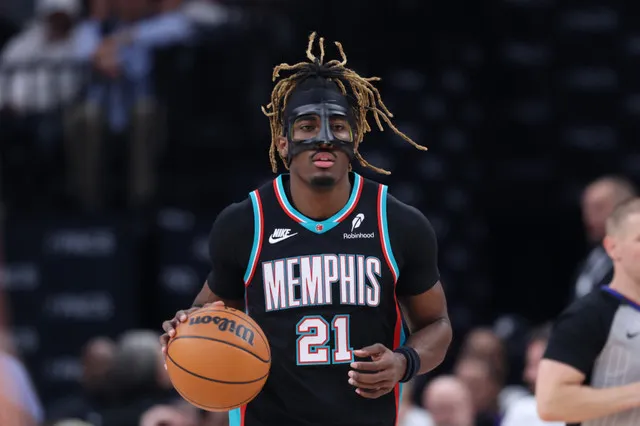
Memphis entered this game without GG Jackson, Cam Spencer, Cedric Coward, Olivier-Maxence Prosper, Taj Gibson, and Javon Small — leaving just six active players to carry the entire load. Dariq Whitehead was their brightest moment, scoring 21 points in just 23:35 of action while shooting 44.4% from the floor.
Rayan Rupert battled hard for 16 points and 12 rebounds, but his 28.0% field goal percentage and 9.1% from three showed how suffocating Utah’s defense was. Jahmai Mashack played a full 48 minutes and notched 15 rebounds with 14 assists — impressive numbers undercut by a damaging 10-turnover night that gave Utah easy transition buckets.
Quarter-by-Quarter Breakdown — Utah’s Grip Tightened Every Period
| Team | Q1 | Q2 | Q3 | Q4 | Final |
|---|---|---|---|---|---|
| Memphis Grizzlies | 30 | 22 | 22 | 27 | 101 |
| Utah Jazz | 33 | 41 | 36 | 37 | 147 |
Injury Report
| Team | Player | Position | Status | Injury | Expected Return |
|---|---|---|---|---|---|
| UTAH | Elijah Harkless | G | Out | Hamstring – Strain | 2026-04-12 |
| UTAH | Lauri Markkanen | F | Out | Hip – Pinched Nerve | 2026-04-12 |
| UTAH | Isaiah Collier | G | Out | Hamstring – Strain | 2026-04-12 |
| UTAH | Kyle Filipowski | F | Out | Back | 2026-04-12 |
| UTAH | Brice Sensabaugh | F | Out | Rest | 2026-04-12 |
| MEM | Olivier-Maxence Prosper | F | Out | Ankle – Soreness | 2026-04-12 |
| MEM | Walter Clayton Jr. | G | Out | Hip – Soreness | 2026-04-12 |
| MEM | Cedric Coward | F | Out | Back – Soreness | 2026-04-12 |
| MEM | Cam Spencer | G | Out | Back – Soreness | 2026-04-12 |
| MEM | Taylor Hendricks | F | Out | Thumb – Sprain | 2026-04-12 |
How the Scorers Stacked Up — Full Player Stats Breakdown
Every active player logged real minutes in this one. Memphis dressed just six healthy bodies and Utah rolled out seven — and the stats below show exactly how that depth gap played out across 48 minutes.
Utah Jazz — Complete Individual Player Stats
| PLAYER | POS | PTS | MIN | FGM | FGA | FG% | 3PM | 3PA | 3P% | FTM | FTA | FT% | OREB | DREB | REB | AST | STL | BLK | TO | PF | +/- |
|---|---|---|---|---|---|---|---|---|---|---|---|---|---|---|---|---|---|---|---|---|---|
| Blake Hinson | F | 30 | 34:55 | 12 | 19 | 63.2 | 4 | 9 | 44.4 | 2 | 2 | 100 | 0 | 2 | 2 | 2 | 2 | 0 | 2 | 0 | +19 |
| Bez Mbeng | G | 27 | 38:10 | 12 | 19 | 63.2 | 1 | 3 | 33.3 | 2 | 3 | 66.7 | 4 | 7 | 11 | 11 | 3 | 0 | 1 | 1 | +40 |
| Kennedy Chandler | G | 26 | 40:55 | 11 | 20 | 55.0 | 4 | 7 | 57.1 | 0 | 4 | 0.0 | 0 | 5 | 5 | 10 | 2 | 0 | 4 | 2 | +37 |
| Ace Bailey | G | 23 | 28:46 | 10 | 19 | 52.6 | 3 | 7 | 42.9 | 0 | 0 | 0.0 | 2 | 8 | 10 | 2 | 3 | 1 | 3 | 0 | +29 |
| Oscar Tshiebwe | C | 16 | 28:14 | 7 | 11 | 63.6 | 0 | 0 | 0.0 | 2 | 4 | 50.0 | 4 | 18 | 22 | 3 | 1 | 2 | 1 | 2 | +27 |
| Cody Williams | F | 14 | 33:32 | 6 | 16 | 37.5 | 2 | 6 | 33.3 | 0 | 2 | 0.0 | 0 | 3 | 3 | 5 | 0 | 0 | 2 | 0 | +37 |
| John Konchar | G/F | 11 | 35:28 | 4 | 6 | 66.7 | 1 | 3 | 33.3 | 2 | 2 | 100 | 2 | 9 | 11 | 10 | 5 | 2 | 3 | 4 | +41 |
Utah’s Reserve Duo Brought Starter-Level Production
Bez Mbeng and John Konchar came off the bench and combined for 38 points, 22 rebounds, and 21 assists — numbers that would headline a box score on any other night. Mbeng’s 11-assist performance as a reserve kept Utah’s ball movement sharp and purposeful, even when starters rotated off.
Memphis Grizzlies — Complete Individual Player Stats
| PLAYER | POS | PTS | MIN | FGM | FGA | FG% | 3PM | 3PA | 3P% | FTM | FTA | FT% | OREB | DREB | REB | AST | STL | BLK | TO | PF | +/- |
|---|---|---|---|---|---|---|---|---|---|---|---|---|---|---|---|---|---|---|---|---|---|
| Dariq Whitehead | G | 21 | 23:35 | 8 | 18 | 44.4 | 3 | 10 | 30.0 | 2 | 2 | 100 | 1 | 2 | 3 | 0 | 0 | 0 | 3 | 0 | -7 |
| Toby Okani | F | 20 | 41:59 | 9 | 22 | 40.9 | 2 | 8 | 25.0 | 0 | 0 | 0.0 | 2 | 0 | 2 | 2 | 0 | 0 | 1 | 3 | -44 |
| Adama Bal | F | 18 | 38:29 | 6 | 12 | 50.0 | 3 | 8 | 37.5 | 3 | 3 | 100 | 0 | 2 | 2 | 4 | 1 | 1 | 1 | 2 | -42 |
| Rayan Rupert | F | 16 | 39:57 | 7 | 25 | 28.0 | 1 | 11 | 9.1 | 1 | 1 | 100 | 4 | 8 | 12 | 4 | 3 | 1 | 3 | 4 | -45 |
| Jahmai Mashack | C | 13 | 48:00 | 6 | 13 | 46.2 | 0 | 2 | 0.0 | 1 | 2 | 50.0 | 1 | 14 | 15 | 14 | 2 | 0 | 10 | 3 | -46 |
| Lucas Williamson | G | 13 | 48:00 | 5 | 19 | 26.3 | 2 | 13 | 15.4 | 1 | 1 | 100 | 3 | 10 | 13 | 3 | 4 | 0 | 1 | 3 | -46 |
What Memphis’s Single Bench Option Could Realistically Offer
Rayan Rupert was literally the only bench piece available, and he played 39:57 — nearly a full game. He gave 16 points and 12 rebounds which shows serious effort, but the 28.0% field goal percentage reflects the impossible pressure one player can’t carry alone. Those searching Memphis Grizzlies’ other game results and rotation depth across the 2025-26 run know this injury crunch has been building for weeks.
You May Have Missed: Oklahoma City Thunder vs LA Clippers Match Player Stats
Utah Jazz vs Memphis Grizzlies — Side-by-Side Team Stats Comparison
Here’s how the two teams stacked up across every major category in this April 10 matchup:
| Stat | Utah Jazz | Memphis Grizzlies |
|---|---|---|
| Points | 147 | 101 |
| FG Made – Attempted | 62 – 110 | 41 – 109 |
| FG% | 56.4% | 37.6% |
| 3PM – 3PA | 15 – 35 | 11 – 52 |
| 3P% | 42.9% | 21.2% |
| FT Made – Attempted | 8 – 17 | 8 – 9 |
| Total Rebounds | 64 | 47 |
| Assists | 43 | 27 |
| Steals | 16 | 10 |
| Turnovers | 16 | 19 |
| Blocks | 5 | 2 |
The 18.8-point shooting percentage gap between these two teams is the clearest summary of how this night went. Utah generated high-quality looks and converted them consistently, while Memphis fired up a high volume of threes out of necessity — 52 attempts at 21.2% — without the personnel to sustain it. Even with Utah shooting just 47.1% from the free-throw line (8-of-17), the Jazz’s advantage everywhere else made that completely irrelevant.
What the Numbers Actually Tell Us — Key Game Takeaways
- The +/- column told the real story: John Konchar finished at +41 as a bench player, Bez Mbeng at +40 — while Dariq Whitehead at -7 was technically Memphis’s best on the night. That gap alone defines this game. Fans who want to stay up to date with comprehensive NBA team performance data and full season-wide box score records will find this one worth bookmarking.
- Memphis committed 19 turnovers to Utah’s 16 — giving away extra possessions on a night they had no margin for error with only six active players on the roster.
- Utah’s 43 assists came on 62 made baskets — that means almost every single bucket was assisted. This wasn’t individuals getting hot; this was a full system executing with precision.
- Utah went just 8-of-17 from the free-throw line (47.1%) — leaving 9 points on the board — and still won by 46. That’s how dominant the rest of their performance was on both ends.
Memphis Grizzlies vs Utah Jazz Match PDF
Frequently Asked Questions
Q: Who won the Memphis Grizzlies vs Utah Jazz match on April 10, 2026?
A: Utah Jazz won the game convincingly, defeating the Memphis Grizzlies 147–101 at Delta Center in Salt Lake City, Utah on Friday, April 10, 2026.
Q: Who was the leading scorer in the Grizzlies vs Jazz game on April 10?
A: Blake Hinson led all scorers with 30 points on 63.2% shooting and 4 three-pointers. Bez Mbeng followed with 27 points and 11 assists for the Jazz.
Q: What was the final score of the Memphis Grizzlies vs Utah Jazz April 10 game?
A: The final score was Utah Jazz 147, Memphis Grizzlies 101. Utah controlled every quarter and finished with a dominant 46-point margin at Delta Center.
Q: How many rebounds did Oscar Tshiebwe record against the Memphis Grizzlies?
A: Oscar Tshiebwe grabbed 22 total rebounds — 4 offensive and 18 defensive — in just 28:14 minutes, making him the top rebounder in the game.
Q: Where was the Memphis Grizzlies vs Utah Jazz April 10 2026 game held?
A: The game was played at Delta Center in Salt Lake City, Utah, in front of 18,186 fans. Officials were Tyler Ford, Matt Kallio, and Natalie Sago.
Q: How many active players did the Memphis Grizzlies have against Utah Jazz?
A: Memphis had only six active players due to multiple injury and coach decision absences, forcing Jahmai Mashack and Lucas Williamson each to play all 48 minutes.
Q: What was Utah Jazz’s field goal percentage in the April 10 game vs Memphis?
A: Utah Jazz shot 56.4% from the field, converting 62 of 110 attempts — one of the biggest reasons behind their 46-point blowout victory over Memphis.
Q: Who were the top Memphis Grizzlies scorers against Utah Jazz on April 10 2026?
A: Dariq Whitehead led Memphis with 21 points, followed by Toby Okani with 20, Adama Bal with 18, and Rayan Rupert with 16 points and 12 rebounds.
Final Thoughts — A Dominant Jazz Performance Worth Remembering
Utah Jazz didn’t just beat a short-handed Memphis squad — they dismantled them with a system performance that’s hard to argue with: 56.4% shooting, 43 assists, and four double-digit scorers who all finished with positive plus/minus ratings. Memphis showed genuine grit with a six-man rotation grinding through 48 minutes, but on this Friday night in Salt Lake City, the talent gap was simply too wide. This is the kind of blowout win that doesn’t happen by accident — Utah came in locked, executed their game plan cleanly, and left no doubt.